





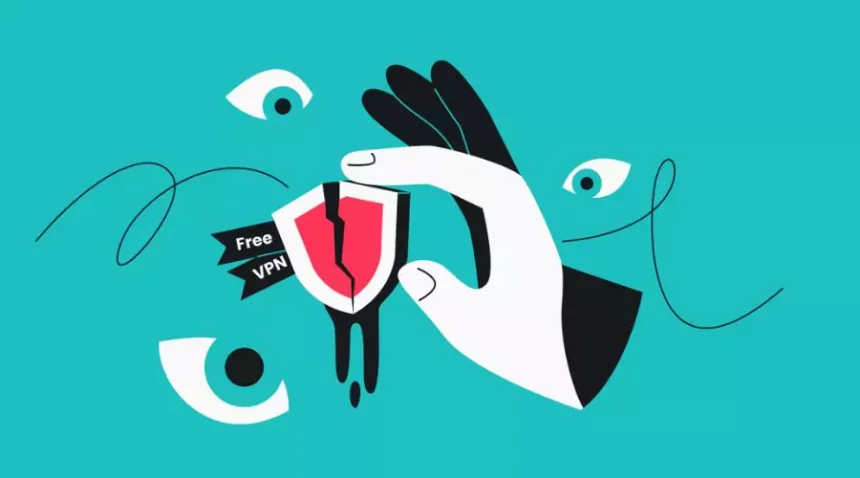
Digital privacy and protection are more alarming than ever! VPNs have become essential tools for cybersecurity today. Free VPNs, with their zero-cost appeal, have attracted millions of users worldwide. However, beneath their convenient exterior lurks a host of potential risks and compromises that many users overlook. The Risks of Free VPNs extend far beyond occasional connection issues or slower speeds – they can fundamentally undermine your privacy and security. If you have been compromising on paid VPNs and using free VPNs, this is the right article for you. There are many hidden dangers behind these seemingly helpful services that many are ignorant about, and why the adage “you get what you pay for” rings especially true in the VPN industry.
What Are Free VPNs?
Free VPNs are services that provide Virtual Private Network connections without requiring users to pay subscription fees. Like their paid counterparts, they claim to offer essential VPN functionalities: encrypting your internet traffic, masking your IP address, and providing a more private browsing experience.
Typically, free VPN providers offer applications for various devices and platforms, including Windows, macOS, Android, and iOS. They promise to protect your data when you are connected to public Wi-Fi networks, bypass geo-restrictions on content, and shield your online activities from prying eyes.
However, the fundamental question remains: How do these services sustain their operations without charging users? Unlike paid VPN services that rely on subscription revenue to maintain server networks, develop security features, and pay staff, free VPN providers must find alternative funding methods. These alternative revenue streams represent the first red flag when examining the Risks of Free VPNs.
Most free VPN services employ one or more of these business models:
- Advertising-supported services: Displaying ads within the VPN application or injecting ads into your browsing sessions
- Freemium models: These models offer limited free services to entice users to upgrade to paid tiers
- Data collection and sales: Tracking user activities and selling this information to third parties
- Resource sharing: Using your device’s resources or bandwidth to support other users or services
Understanding these business models is crucial to recognizing the potential compromises and Risks of Free VPNs that may affect your privacy and security online.
Major Disadvantages of Free VPNs That Many Don’t Know

Data Logging and Privacy Violations
Perhaps the most alarming of the Risks of Free VPNs involves their data logging practices. While many free VPN providers claim to maintain “no-logs” policies, investigations have repeatedly revealed contradictory practices. A 2016 CSIRO study found that 75% of free VPN apps contained tracking libraries to monitor user activity.
For instance, in 2017, popular free VPN provider Hotspot Shield was accused by privacy advocacy groups of tracking users, collecting data, and sharing this information with advertising networks – all while claiming to provide “complete anonymity.” Their privacy policy revealed that they collected:
- User IP addresses
- Approximate geographic locations
- Browsing and purchasing histories
- Device information
- Network information
This data collection fundamentally contradicts the core purpose of a VPN – enhancing privacy rather than compromising it.
Malware Distribution
Another serious concern among the Risks of Free VPNs is malware distribution. The same CSIRO study mentioned earlier discovered that 38% of free VPN apps contained malware or malicious code. These malicious elements can range from relatively benign adware to dangerous trojans that steal personal information.
In 2019, security researchers identified several free VPN apps on the Google Play Store with millions of downloads that were infected with malware designed to hijack users’ web browsers, redirect to advertising pages, and collect personal data. The apps SuperVPN, Rabbit VPN, and Free VPN Master were among those flagged for containing malicious code.
- Weak or Misleading Encryption
Many free VPN services advertise “military-grade encryption” but implement far weaker protocols in practice. Some use outdated encryption standards like PPTP (Point-to-Point Tunneling Protocol), which has known security vulnerabilities. Others may claim to use strong encryption while actually implementing it incorrectly or incompletely.
A particularly concerning practice is the use of false visual indicators – showing a “connected” status when the VPN tunnel is actually failing to encrypt data properly. This creates a dangerous false sense of security, one of the subtle but significant Risks of Free VPNs.
Selling Bandwidth and IP Addresses
Some free VPN services operate by selling users’ bandwidth to third parties. Hola, once a popular free VPN service with millions of users, was discovered in 2015 to be selling users’ idle bandwidth through a separate service called Luminati. This meant that other users could potentially route traffic through your connection, possibly involving you in illegal activities without your knowledge.
Similarly, some free VPNs have been caught selling access to users’ IP addresses, which can be used for various purposes, including ad fraud, content scraping, or even denial-of-service attacks.
DNS Leaks and Inadequate Kill Switches
Technical inadequacies represent another category of the Risks of Free VPNs. DNS leaks occur when a VPN fails to properly route DNS requests through the encrypted tunnel, potentially exposing your browsing activities to your ISP or other entities. Testing has shown that many free VPNs suffer from DNS leaks, WebRTC leaks, and IP leaks that compromise user privacy.
Throttling and Data Caps
Performance limitations, while less dangerous than security issues, remain significant Risks of Free VPNs for usability. Most free services implement severe data caps (typically 500MB-2GB per month), aggressively throttle connection speeds, and restrict access to faster servers. These limitations make free VPNs impractical for regular use, streaming, or downloading.
Why People Are Attracted to Free VPNs
Despite the significant Risks of Free VPNs, these services continue to attract millions of users worldwide. Several factors explain this persistent appeal:
- Zero Financial Commitment
The most obvious attraction is cost – or lack thereof. Free VPNs require no payment information, subscription commitments, or financial investment. This zero-cost entry point makes them accessible to users who:
- Cannot afford paid services
- Have occasional, non-critical VPN needs
- Want to test VPN functionality before committing to a paid service
- Live in regions where digital services are prohibitively expensive relative to local incomes
- Simplicity and Immediate Gratification
Many free VPNs offer exceptionally simple interfaces with one-click connections. This streamlined user experience, combined with instant access without registration requirements, creates a frictionless onboarding process. Users can download the application and connect within minutes, satisfying the desire for immediate solutions to privacy concerns.
- Limited Awareness of the Risks
A significant factor driving free VPN adoption is simply a lack of awareness about the Risks of Free VPNs. Many users assume that all VPN services function similarly, differing only in speed or features rather than fundamental security practices. This knowledge gap allows free VPN providers to attract users who don’t realize the privacy compromises they’re making.
- Misconceptions About VPN Technology
Misconceptions about how VPNs work contribute to the appeal of free options. Some users believe that any service labeled as a “VPN” automatically provides complete privacy and security. This misunderstanding leads people to select VPNs based solely on convenience or brand recognition rather than security practices or business models.
- Geographic Restrictions and Censorship Circumvention
In regions with internet censorship or content geo-restrictions, free VPNs offer an accessible way to bypass these limitations. For users primarily seeking to access blocked content rather than comprehensive privacy protection, the apparent functionality of free VPNs can seem adequate despite the underlying Risks of Free VPNs to their data security.
Benefits of Paid VPNs – worth every penny!
Legitimate Business Model
Paid VPNs operate on a straightforward business model: customers pay for a service that protects their privacy. This creates direct accountability between the provider and users without relying on data collection or third-party advertising for revenue. This alignment of incentives fundamentally addresses many of the Risks of Free VPNs related to data exploitation.
Robust Security Features
Premium VPN services typically offer:
- Latest encryption protocols (OpenVPN, WireGuard, IKEv2)
- Perfect forward secrecy
- DNS leak protection
- Reliable kill switches
- Split tunneling capabilities
- Multi-hop connections for additional security layers
These features provide comprehensive protection that free services rarely match in implementation quality or reliability.
Strict No-Logs Policies with Verification
Leading paid VPN providers maintain strict no-logs policies, often verified through independent security audits and demonstrated in real-world situations. For instance, several premium VPNs have had their no-logs claims tested when authorities seized their servers but found no user data. This level of verification addresses one of the most serious Risks of Free VPNs – data logging and privacy violations.
Performance and Reliability
Paid services maintain extensive server networks optimized for performance, offering:
- Higher connection speeds without throttling
- Unlimited data usage
- Greater server selection across more countries
- Less congestion on servers
- Better reliability for streaming and gaming
- More consistent connections with less downtime
Dedicated Customer Support
Quality customer support represents another advantage over free alternatives, with paid services typically offering:
- 24/7 live chat support
- Detailed setup guides
- Troubleshooting assistance
- Fast response times for technical issues
Conclusion
The appeal of free services is undeniable, but the Risks of Free VPNs far outweigh the benefit of saving a few dollars per month. From privacy violations and data collection to malware risks and inadequate security implementations, free VPNs often undermine the very privacy they claim to protect. Instead of safeguarding your digital life, they may be exposing you to greater vulnerabilities while creating a false sense of security. As we navigate an increasingly complex online landscape, the distinction between free and paid privacy tools becomes not just a matter of features but of fundamental trust and security. For more updates on VPN services, visit Saasmarkt.